What to pack for Phuket: a 2026 checklist
What to pack for Phuket and Thailand in 2026: documents and TDAC, temple clothes, medicines, adapters, what is banned at customs and what to buy locally.
Updated: 2026-10-10 · 7 min read · AURA Phuket
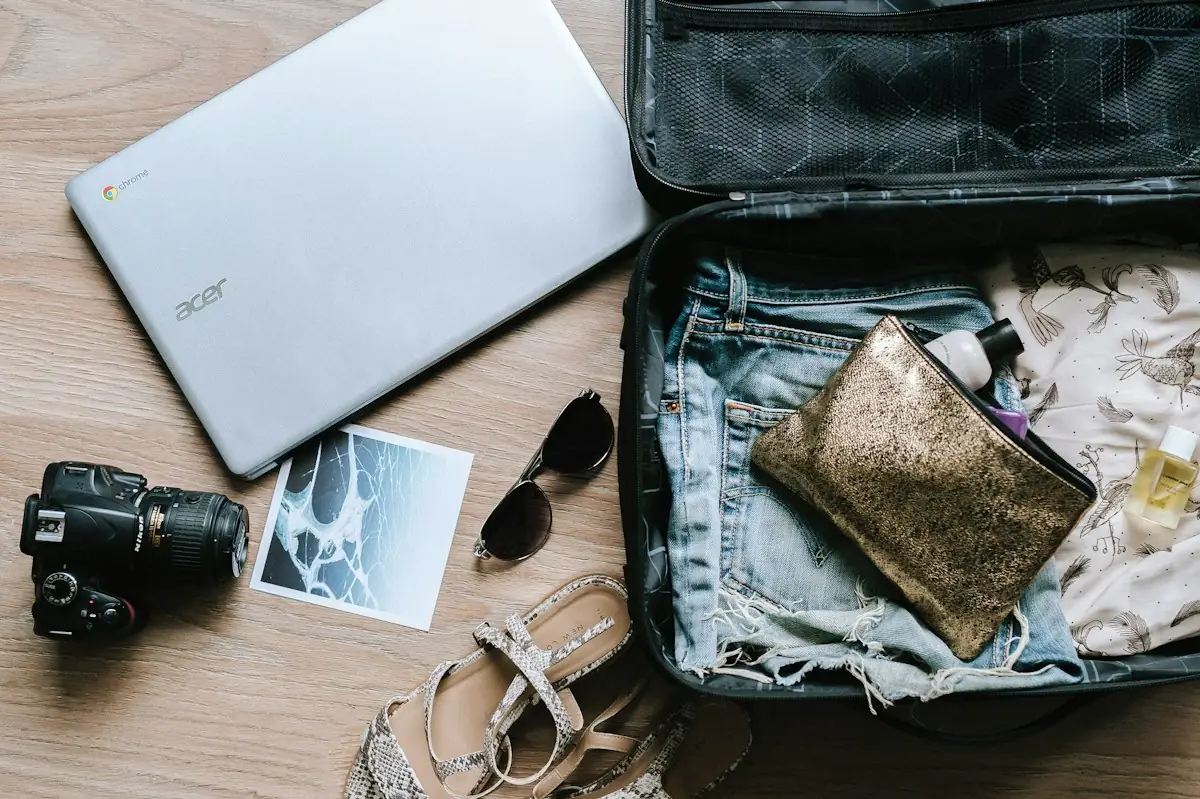
What to pack for Phuket: a passport valid for at least six more months, travel insurance, a return ticket, the QR code from the online TDAC arrival card, two bank cards and some foreign cash, light clothes plus one covered-up outfit for temples, reef-safe sunscreen, your own medicines with a prescription and a universal adapter. Everything else is easier to buy on the island, and leave your vape at home: vaping is banned in Thailand.
Key facts
- Your passport must be valid for at least 6 months on the day you arrive.
- The TDAC is free at tdac.immigration.go.th, filed no earlier than 3 days before arrival, and needed for every entry.
- At the border you may be asked for an onward ticket within your permitted stay and about 20,000 baht per person.
- Mains power is 220 V, 50 Hz, with type A, B, C and O sockets: a universal adapter covers it.
- Medicines: a personal supply of up to 30 days, in original packaging, with an English prescription.
- Vapes, e-liquids and heated tobacco such as IQOS are banned: import, possession and use.
Documents: what goes in your hand luggage
- A passport valid for six months or more. Photograph the photo page and keep a copy in cloud storage and in your email.
- A ticket out of Thailand within your permitted stay: the border officer is entitled to ask for it. The visa-free period for Russian citizens changed during 2026, so check the current rules before you book the return flight.
- The TDAC QR code. The arrival card is filed online on the official site, and it is free. Sites charging 10–100 US dollars for it are middlemen or scammers.
- An insurance policy in English, as a PDF on your phone and on paper. Check whether it covers scooter riding and diving if you plan either.
- Proof of funds: under the rules a tourist can be asked to show about 20,000 baht per person or 40,000 baht per family, with children under 12 not counted. It is rarely checked, but a bank statement on your phone settles the question.
- Your driving licence together with an International Driving Permit if you plan to drive. To ride a scooter, the licence needs the motorcycle (A) category.
Visa-free entry to Thailand for Russians — current rules
Money: cards, cash and limits
Bring two cards from different banks and keep them apart: if one gets blocked or swallowed by a cash machine, your trip does not grind to a halt. If your cards are issued by Russian banks, work out in advance how you will pay and withdraw money, since the options change and it is easier to sort out at home than in front of an ATM. Bring foreign cash in US dollars or euros: large, new-series notes in good condition usually get the best rate at exchange booths, while creased or torn ones may be refused. A few thousand baht covers the first day; it makes more sense to change the rest on the island. If the foreign currency you carry exceeds the equivalent of 15,000 US dollars in total, it must be declared at customs.
Clothes for heat, downpours and temples
Phuket typically sees +30 to +33 °C by day and +23 to +26 °C at night all year round, so warm clothes are rarely needed. May to October is the rainy season: downpours are heavy but usually short, and September and October are the wettest months. Swimwear stays on the beach, not in town, shops or cafés, and temples require covered shoulders and knees.
- Light cotton and linen: 3–4 T-shirts, shorts, a dress or shirt for the evening. Laundry on the island is inexpensive, so you do not need much.
- One outfit for temples: light trousers or a long skirt and a T-shirt with sleeves. A sarong or scarf helps if you end up at a temple in a vest top.
- Shoes that slip off easily: you take them off at the door of temples, massage salons and many homes.
- Reef shoes for rocky beaches and snorkelling.
- A light jumper: air conditioning on the plane, in shopping malls and in tour minivans is seriously cold.
- From May to October, a folding umbrella or a light rain jacket. Jeans and a second pair of trainers usually stay in the suitcase unused.
Sun and sea: which sunscreen to bring
Since August 2021, sunscreens containing oxybenzone, octinoxate, 4-methylbenzylidene camphor or butylparaben have been banned in Thailand’s marine national parks, including the Similans, Phi Phi and Phang Nga Bay. The fine is up to 100,000 baht, and the national parks department repeated the warning in October 2025. It is simpler to bring a mineral sunscreen based on zinc oxide or titanium dioxide labelled reef safe, and to check the ingredients on the tube. The sun at this latitude is harsh all year, so pack a hat, sunglasses and SPF 50. A rash guard for snorkelling protects your back better than any cream and saves on sunscreen too.
First-aid kit and prescription medicines
Ordinary medicines for your own use can be brought in for up to 30 days of treatment, in original packaging and with a prescription or doctor’s note in English. Medicines that Thailand classes as narcotic or psychotropic are stricter: up to 30 days only with a doctor’s letter stating the diagnosis, dosage and total quantity, while a 31 to 90 day supply needs a permit from the Thai FDA, applied for online at least two weeks before you travel. The list includes some sleeping pills, strong painkillers and even combination cold remedies containing pseudoephedrine. The rules are revised from time to time, so check the FDA website before you fly; this section is not a substitute for medical advice.
Thailand first-aid kit and health risks — guide
Gadgets and connectivity
- An adapter. Slim phone-charger plugs fit most local sockets, while chunky earthed plugs (laptop, hair dryer, curling iron) need a universal adapter.
- Power banks travel in hand luggage only; that is an airline rule.
- An eSIM activated before you leave home: you need data the moment you land to book a ride in an app and message your hotel.
- Grab and Bolt installed in advance, an offline map of the island and a translator app with Thai.
- A waterproof phone pouch for boat trips and the rainy season.
eSIM for Thailand — set it up before you fly — 1 option, from 50 ฿
What not to bring: bans and limits
- E-cigarettes, vapes, pods, e-liquids (including nicotine-free ones) and heated tobacco devices such as IQOS. The ban covers import, possession and use; they are confiscated at the border, and offenders face a heavy fine or even a criminal case.
- More than 200 cigarettes (one carton) or 1 litre of alcohol per adult. The excess is taxed or confiscated, and customs is particularly strict about cigarettes.
- Controlled medicines beyond a 30-day supply without an FDA permit.
- Dead weight: most hotels provide a hair dryer and beach towels, while a mountain of cosmetics and heavy shoes only eat into your baggage allowance.
Other rules that affect tourists once they are on the island, from beach conduct to fines for riding without a helmet, are collected in a separate guide to Thailand’s laws and fines.
Bring from home or buy on the island
| Item | Where to get it | Why |
|---|---|---|
| Prescription medicines | From home | Your usual brand plus a prescription for customs |
| Reef-safe SPF 50 | From home | Ingredients checked in advance, a brand you know |
| Adapter | From home | You need it within the first hour |
| eSIM | Online, in advance | You need data at the airport |
| Insect repellent | On the island | Local sprays are sold at 7-Eleven and pharmacies |
| Flip-flops, sarong, beachwear | On the island | Inexpensive at markets and malls |
| Rain poncho | On the island | Sold in convenience stores |
| Snorkel mask | Optional | Tours provide one; your own fits better |
| Shampoo, toiletries, household items | On the island | Supermarkets and pharmacies in every area |
Frequently asked questions
What should I take to Thailand: the shortest possible list?
A passport valid for six months or more, insurance, an onward ticket, the TDAC QR code, two cards and some cash, medicines with a prescription, an adapter, reef-safe sunscreen and an eSIM. Everything else is easy to buy in Phuket.
What sockets does Phuket use, and do I need an adapter?
The supply is 220 V at 50 Hz, with type A, B, C and O sockets, often combined. Slim plugs usually fit, but bring a universal adapter for chunky earthed plugs.
Can I bring medicines into Thailand?
Yes, a personal supply of up to 30 days in original packaging with an English prescription. Narcotic and psychotropic medicines beyond 30 days need a Thai FDA permit arranged in advance.
Can I bring a vape or IQOS?
No. E-cigarettes, e-liquids and heated tobacco devices are banned in Thailand; customs confiscates them, and possessing or using them can bring heavy fines.
How much cash should I bring to Phuket?
For the first days, bring foreign cash you can change in stages; the rules allow officers to check for about 20,000 baht per person. Anything over 15,000 US dollars in total must be declared at customs.
Do I need warm clothes in Phuket?
Hardly: even nights are around +23 to +26 °C. Pack one light jumper for the plane, shopping malls and minivans with strong air conditioning.
To land light and skip first-day hassle, you can request your airport transfer, eSIM and rental vehicle in advance through the AURA catalogue: a request takes about a minute, the partner’s manager confirms the details, and you pay the partner directly once it is confirmed.