Phuket Old Town: What to See and How to Get There
Thalang, Dibuk and Soi Romanee, Chinpracha House and the Thai Hua Museum with entry prices, a half-day walking route, where to eat and how to get there.
Updated: 2026-10-10 · 7 min read · AURA Phuket
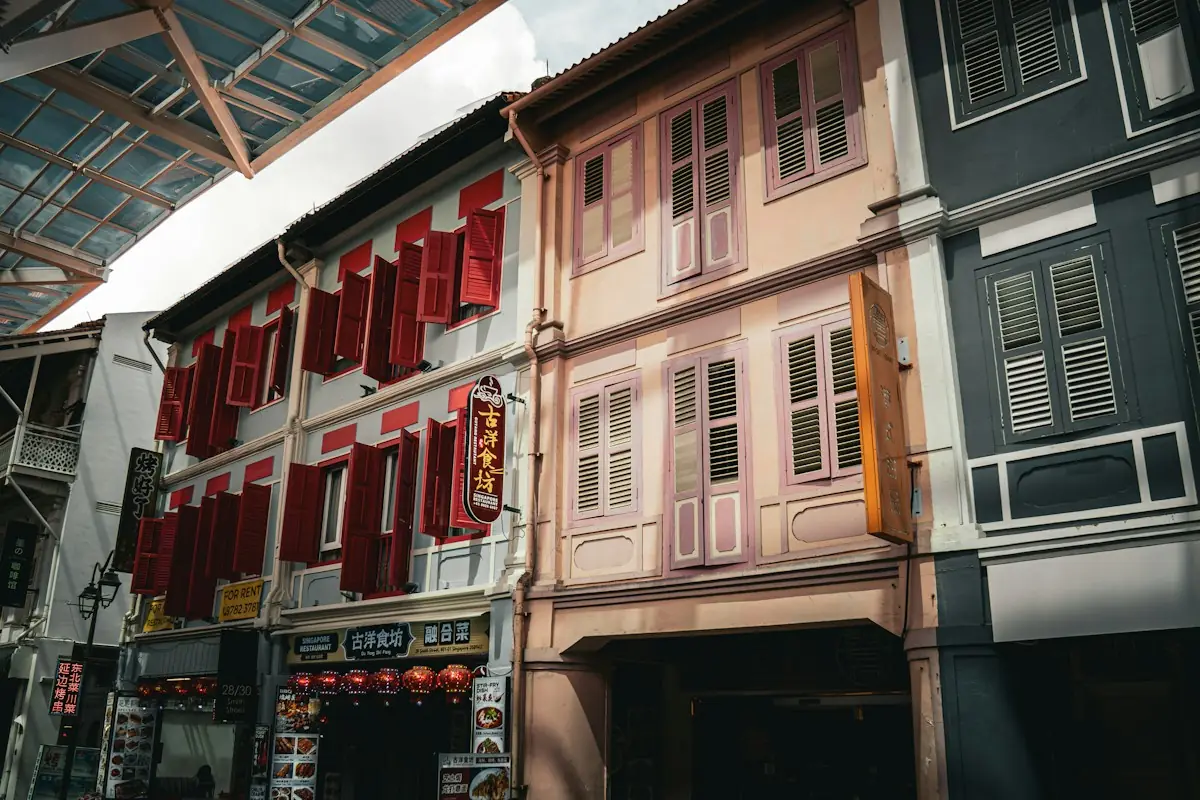
Phuket Old Town (Phuket Town) is a handful of streets of Sino-Portuguese houses in the centre of the island’s capital: Thalang, Dibuk, Krabi and Phang Nga Roads and the Soi Romanee lane. The sights are Chinpracha House, the Thai Hua Museum, Chinese shrines and cafés in old shophouses. You can walk it all in half a day, and it is a 30–40 minute drive from Patong.
Key facts
- The old quarter is compact: the main streets fit into a walk of about 2 km.
- The houses date from the tin boom of the late 19th and early 20th centuries, built by Chinese settlers from Fujian.
- Chinpracha House (98 Krabi Road): entry for foreigners is around 150 ฿, open in the daytime until about 4pm.
- Thai Hua Museum: about 200 ฿ for foreigners, 9am–5pm; sources disagree on the closing day.
- The Lard Yai Sunday market on Thalang Road runs on Sundays from 4pm.
- In 2015 Phuket joined the UNESCO network as a City of Gastronomy, and the Old Town is the best place to taste why.
What the Old Town is and where the houses came from
Phuket grew rich on tin. In the second half of the 19th century thousands of Chinese from Fujian came to work the mines, and some of them settled and prospered. Merchants built long, narrow shophouses: a shop downstairs, living quarters upstairs and a covered «five-foot way» in front that keeps off both sun and downpours. The arched façades, shutters and stucco were borrowed from Penang and Singapore, hence the name «Sino-Portuguese style».
The descendants of marriages between Chinese settlers and locals call themselves Baba (Peranakan). Their culture shows everywhere: in the cooking, the wedding rituals and the family altars you can glimpse through open shop doors. The Old Town is still a lived-in neighbourhood rather than an open-air museum: people live, trade and pray here, so behave like a guest.
What to see in Phuket Old Town: the streets
- Thalang Road is the main street, with the most intact rows of shophouses, fabric shops, cafés and souvenirs. On Sunday evenings it hosts the Lard Yai market.
- Soi Romanee is a short lane between Thalang and Dibuk with pastel-coloured houses. It used to be an entertainment quarter and is now cafés and guesthouses; it is the most photographed spot in town, so come before 10am.
- Dibuk Road is quieter and smarter than Thalang, with well-restored façades and a few old mansions.
- Krabi Road is the street of mansions: the Thai Hua Museum, Chinpracha House and the Phra Phitak Chinpracha Mansion, home to the Blue Elephant restaurant.
- Phang Nga Road has the Shrine of Serene Light (Saeng Tham), tucked away at the end of a narrow passage between houses.
Mansions, museums and shrines: hours and entry
Go inside at least one place, or the Old Town stays a row of façades. The prices and hours below come from several sources and may differ in October 2026; if you are going for a particular museum, check its opening day the day before.
| Place | What is inside | Entry and hours (guide) |
|---|---|---|
| Chinpracha House | A wealthy family’s home: open-air courtyard, furniture, photos | about 150 ฿, daytime until 4–4:30pm |
| Thai Hua Museum | A 1934 Chinese school building, the story of settlers and tin | about 200 ฿, 9am–5pm |
| Shrine of Serene Light | A small Taoist shrine with carvings | free, daytime |
| Jui Tui Shrine | The main temple of the Vegetarian Festival | free, daytime |
| Blue Elephant mansion | A colonial mansion, now a restaurant | as a restaurant guest only |
Chinpracha House suits those who want to see how wealthy families lived: a central open courtyard that lets in rain and light, carved partitions and family portraits. Thai Hua is better if history is your thing: rooms on the settlers, the tin mines, the cuisine and the Peranakan wedding. The Jui Tui Shrine on Ranong Road comes alive in October during the Vegetarian Festival, which has its own article on our site.
A half-day walking route
The route below takes 3–4 hours with coffee stops and one museum. Start at 8:30–9am, while it is cool and there is no queue for photos in Soi Romanee, or after 3pm so that you finish with dinner.
- Thai Hua Museum on Krabi Road: 45–60 minutes for the rooms.
- Five minutes along the same street: Chinpracha House and the Blue Elephant mansion (from outside, or for lunch).
- Turn onto Thalang: walk slowly, looking into shops and under the arcades.
- Soi Romanee: photos and coffee in one of the lane’s cafés.
- Dibuk: the neatest façades and quiet coffee shops.
- Phang Nga Road: the Shrine of Serene Light at the end of its passage.
- Finish by the market on Ranong Road and the Jui Tui Shrine, where the blue songthaews leave for the beaches.
For a view over the town, Khao Rang hill with its lookout is a 5–10 minute drive away. To see the Old Town together with Wat Chalong and the Big Buddha in one day without sorting out transport, a city tour is easier.
City tour: Old Town, Wat Chalong, Big Buddha — from 1,150 ฿
Where to eat and what to try
The Old Town is where you find Phuket’s own cuisine, which you rarely see at the beaches. Look for mee hokkien (yellow noodles with seafood), moo hong (pork belly braised with pepper and garlic), o-tao (an omelette with small oysters and taro) and morning dim sum. Locals eat breakfast early and many noodle shops close after lunch, so come in the morning for the food.
The AURA catalogue lists Old Town restaurants and cafés, including One Chun, Tu Kab Khao, Raya, Kopitiam by Wilai, Gallery Cafe and Blue Elephant. Check menus and hours on their cards: a table request takes about a minute and the restaurant’s manager confirms the booking.
Phuket Town restaurants — catalogue
How to get to Phuket Old Town
- Taxi or Grab/Bolt: from Patong it is about 15 km and 30–40 minutes, from Kata and Karon 30–45 minutes, from Bang Tao about 40 minutes. Ask to be dropped on Thalang Road.
- Blue songthaew (pick-up bus): from the main beaches to the market on Ranong Road, about 30–50 ฿, no air conditioning, running roughly 7am to 5–6pm. The last ride back leaves early, so it will not work for dinner.
- Scooter or car: parking on the old streets themselves is hard, especially on Sundays. Leave the vehicle on a nearby street and walk.
- On foot inside the quarter: everything is within 10–15 minutes, so you need no taxi between sights.
Taxi, Grab and Bolt fares and how not to overpay are covered in our transport guide. If you come on a Sunday for the market, arrive by 4pm and go back by taxi: by 6pm the streets around Thalang start to jam.
When to go and what to keep in mind
- The best times of day are before 11am and after 4pm. At noon the open streets are hot and there is little shade.
- Sunday is Lard Yai market day: more atmosphere, but crowded. For a quiet walk, pick a weekday.
- In the rainy season (May to October) the Old Town is a good plan for an overcast day: the arcades shelter you from showers and the museums are indoors.
- Enter shrines with shoulders and knees covered, do not point your feet at the altar and do not photograph people praying at close range.
- Bring cash: small shops and market stalls do not always take cards.
Phuket night markets: Lard Yai and more
Frequently asked questions
Phuket Old Town: what to see if you only have a couple of hours?
Walk Thalang, Soi Romanee and Dibuk, and go inside one place: Chinpracha House or the Thai Hua Museum. Two hours with a coffee stop is enough.
How do I get to Phuket Town from Patong?
The quickest way is a taxi or Grab and Bolt: about 15 km and 30–40 minutes. The blue songthaew to the Ranong Road market is cheaper, but the last ride back leaves around 5–6pm.
Do you pay to enter the Old Town?
No, the streets are open to everyone. Only the museums and mansions charge: Chinpracha House is about 150 ฿ and the Thai Hua Museum about 200 ฿ for foreigners. The shrines are free.
Which day is best for Phuket Town?
On Sundays from 4pm the Lard Yai market takes over Thalang Road, the liveliest evening of the week. For photos without crowds and quiet museums, choose a weekday morning.
What food should I try in the Old Town?
Phuket dishes: mee hokkien, moo hong, o-tao and morning dim sum. Noodle shops open early and often close after lunch.
Want to end your Old Town walk with dinner? Pick a Phuket Town restaurant in the AURA catalogue: you pay the venue directly after confirmation, with no fee for the guest.