Thai food in Phuket: what to try and how spicy it is
Tom yum, pad thai, som tam and Phuket’s own dishes: a heat table, how to say “not spicy” in Thai, fruit seasons, durian hotel rules and typical prices.
Updated: 2026-10-10 · 8 min read · AURA Phuket
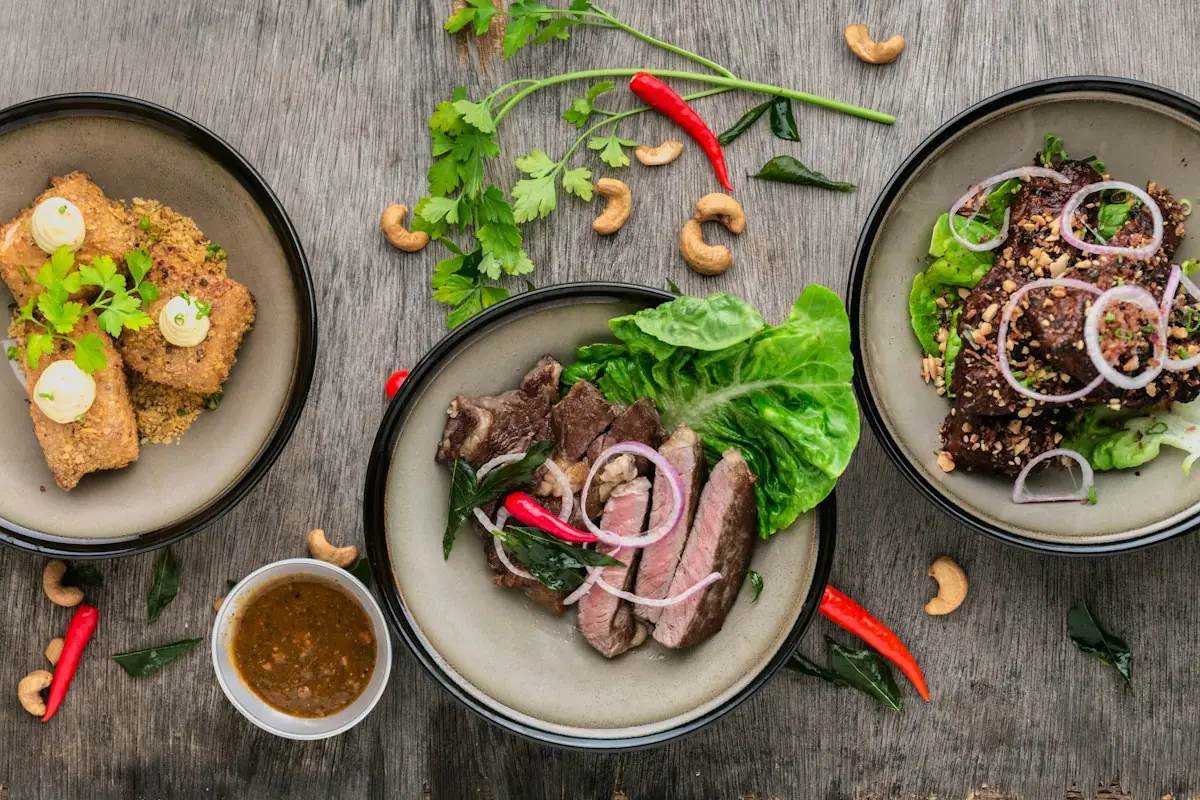
If you are trying Thai food in Phuket for the first time, start with the classics (tom yum, pad thai, som tam, massaman and pad kra pao), then move on to the island’s own dishes: mee hokkien noodles, the o-tao oyster omelette and moo hong braised pork. Heat is adjustable: “mai phet” means “not spicy”, and most dishes are cooked to order.
Key facts
- Since 2015 Phuket has been a UNESCO Creative City of Gastronomy.
- “Mai phet” (ไม่เผ็ด) means “not spicy”; “phet nit noi” means “a little spicy”.
- Pad thai, khao pad, massaman and tom kha usually come with little or no heat; the hottest popular dishes are som tam, green curry and pad kra pao.
- The island’s own classics (mee hokkien, o-tao, moo hong) come from its Hokkien Chinese and Baba-Peranakan heritage.
- Mango sticky rice is best in mango season, roughly March to May; many hotels ban durian from their rooms.
- Rough prices: 50–100 ฿ a dish at a street stall, 80–200 ฿ in a simple café.
The essential Thai dishes: names and heat levels
This is the core set you will find on the menu of almost any Thai café on the island. Spellings vary (pad thai, phad thai, phat thai), so go by the sound of the name. The heat levels in the table are for the usual tourist-area version; in a local eatery the same plate can be noticeably hotter.
| Dish | What it is | Heat |
|---|---|---|
| Tom yum goong | Hot and sour prawn soup with lemongrass, galangal and kaffir lime leaves | Hot |
| Tom kha gai | Coconut milk soup with chicken and galangal | Mild |
| Pad thai | Stir-fried rice noodles with tamarind, egg, tofu, bean sprouts and peanuts | Not spicy |
| Som tam | Green papaya salad with lime, fish sauce and chilli | Very hot |
| Massaman | Rich, gentle curry with potato, peanuts and beef or chicken | Mild |
| Green curry (kaeng khiao wan) | Coconut milk curry with green chilli, Thai aubergine and basil | Hot |
| Khao pad | Fried rice with egg, vegetables and chicken, pork or prawns | Not spicy |
| Pad kra pao | Mince stir-fried with holy basil, garlic and chilli, served on rice | Hot |
A couple of details help you order more precisely. Tom yum comes clear (nam sai) or creamy (nam khon), the creamy one with milk added for a softer, fuller taste. Som tam varies too: “som tam thai” with peanuts and dried shrimp is easy to like on the first try, while the “pu pla ra” version with salted crab and fermented fish is an acquired taste. Pad kra pao is the most common Thai weekday lunch; ask for “kai dao” and it arrives topped with a fried egg with crispy edges.
Thai restaurants in Phuket — catalogue
How to ask for “not spicy”, and what to do if it burns
In the tourist areas the heat is already toned down, but in Phuket Town and local eateries the cooks season the way they would for themselves. Chilli usually goes in during cooking, so ask when you order, not once the plate is on the table.
- “Mai phet” (ไม่เผ็ด): not spicy. The most useful phrase of the trip.
- “Phet nit noi” (เผ็ดนิดหน่อย): a little spicy, when you want flavour without the fire.
- “Mai sai prik” (ไม่ใส่พริก): no chilli, the safe option for children.
- “Mai sai thua” (ไม่ใส่ถั่ว): no nuts or beans; with an allergy, show a card written in Thai rather than relying on your pronunciation.
- The condiments on the table (fish sauce with chilli, dried chilli, sugar, chilli vinegar) are how Thais adjust a dish themselves, so a bland plate is easy to fix.
- If it burns, eat some rice or drink something milky, such as Thai milk tea; plain water does little.
Grills, noodles and street food
Much of the real Thai food is sold from carts and food courts rather than restaurants. It is cheaper and often better: a popular stall has a high turnover, so nothing sits around for long. Here is what to look for.
- Moo ping: pork skewers in a sweetish marinade, the classic breakfast on the go with a bag of sticky rice.
- Gai yang: grilled chicken, served with nam jim jaew dipping sauce (made with toasted rice) and som tam.
- Kor moo yang: sliced grilled pork neck, a beer snack.
- Pla pao: a whole fish baked over charcoal in a salt crust, stuffed with lemongrass.
- Khao man gai: poached chicken on rice cooked in chicken stock, with a ginger sauce; an easy choice for children.
- Kuay teow: rice noodle soup where you pick the noodle width and the meat, then add heat yourself.
The easiest place to try all of this is a night market, where dozens of stalls stand side by side and you can take one portion of each.
Phuket’s own cuisine: what to try only here
In the 19th century Hokkien Chinese workers came to the island for the tin mines. Their cooking blended with Malay and southern Thai food into Baba-Peranakan cuisine, and that cuisine is why Phuket joined the UNESCO Creative Cities Network as a City of Gastronomy in 2015. These dishes are rare even in Bangkok, so this is the place to try them.
- Mee hokkien: thick yellow noodles fried with pork or seafood and greens, often with an egg; served dry or in a thick broth.
- O-tao: a soft omelette with tiny oysters and cubes of taro, topped with crispy pork crackling and coriander.
- Moo hong: pork belly braised with black pepper, garlic and soy sauce; slightly sweet and not spicy at all.
- Lo ba: fried pieces of pork (offal included) with a spicy dipping sauce.
- Khanom jeen: rice noodles with curry and a pile of fresh greens; in Phuket it is breakfast.
- Nam prik kung siap: chilli paste with smoked dried prawns, served with raw vegetables.
- Kaeng som and kaeng lueang: sour southern fish curries with turmeric; southern food runs hotter than central Thai, so be ready.
Phuket Town is the place to look for them. In the AURA catalogue it has Kopitiam by Wilai on Thalang Road (hokkien noodles and local breakfasts) and One Chun, which holds a Michelin Bib Gourmand and serves moo hong and sour fish curry.
Local food: where Phuket people eat
Fruit and desserts: mango, durian and hotel rules
Khao niao mamuang (ripe mango with sticky rice and a slightly salty coconut sauce) is sold all year, but it is best in season, roughly March to May. With the rains, from about May, come mangosteen, rambutan and durian. Markets such as Banzaan in Patong and the fresh markets of Phuket Town sell fruit for less, and the vendor will peel and cut it for you.
Durian has a rule of its own: because of the smell, many hotels, taxis and airlines ban it, and hotel rooms often carry a sign with the fruit crossed out. Some hotels charge a room-cleaning fee if you break the rule, so check at check-in. It is simpler to eat durian at the stall, where they open it for you, or to try it in a dessert such as sticky rice or ice cream.
Where to eat it and what it costs
| Format | Rough price per dish | What to know |
|---|---|---|
| Street stall, market | 50–100 ฿ | Most authentic; cash, menus often in Thai only |
| Food court, local café | 80–200 ฿ | Good value and flavour, picture menus |
| Restaurant in a resort area | 200–450 ฿ | Milder heat; bills often add 10% service and 7% VAT |
Prices are a rough guide and depend on the area: on Patong’s beachfront the same dish costs noticeably more than in Phuket Town. A practical plan for a week: lunches at a local café near your hotel, one evening at a night market, one trip to Phuket Town for the local cuisine and one dinner at a good Thai restaurant to compare.
Stomachs, allergies and vegetarian food
The tube-shaped ice with a hole in the middle is made in factories and goes into drinks everywhere. Fish sauce and shrimp paste are in almost every dish, so mention a seafood allergy specifically, and expect peanuts in pad thai, som tam and massaman. Vegetarians should know the word “jay” (เจ): food of the Chinese Buddhist tradition with no meat, fish or dairy, sold at places marked with yellow flags. There is most of it in October, during the Vegetarian Festival.
Frequently asked questions
What Thai food should I try first?
Start with pad thai, tom kha gai, massaman and khao pad: filling and barely spicy. Once you are comfortable, move on to tom yum, green curry and som tam, and in Phuket be sure to order mee hokkien and moo hong.
Is Thai food very spicy?
Not all of it. Pad thai, khao pad, massaman and most grilled dishes come with little heat, and chilli is added at the table. The hottest are som tam, green curry, pad kra pao and the southern curries.
How do you say “not spicy” in Thai?
“Mai phet” (ไม่เผ็ด). For a little heat say “phet nit noi”, and for children “mai sai prik”, meaning no chilli, is the safer request.
Which dishes are unique to Phuket?
Mee hokkien noodles, the o-tao oyster omelette, moo hong braised pork, lo ba and nam prik kung siap chilli paste. Phuket Town is where they are cooked best.
Can I bring durian into my hotel?
Usually not: because of the smell, many hotels, taxis and airlines ban it. Eat durian at the market, where they open it in front of you.
How much does a meal at a Thai café in Phuket cost?
As a rough guide, 50–100 ฿ a dish at a street stall and 80–200 ฿ in a simple café. Restaurants in the resort areas charge more, and bills often add 10% service and 7% VAT.
Want a Thai dinner matched to your spice tolerance? Describe what you like to the AURA AI concierge: it will suggest places from the catalogue, and a manager at the restaurant confirms the request.