Seafood in Phuket: where to eat and prices for 2026
Rawai seafood market and Banzaan: how buy-and-cook works, prices per kilo, how to pick fresh seafood and avoid overpaying, plus seafront restaurants.
Updated: 2026-10-10 · 6 min read · AURA Phuket
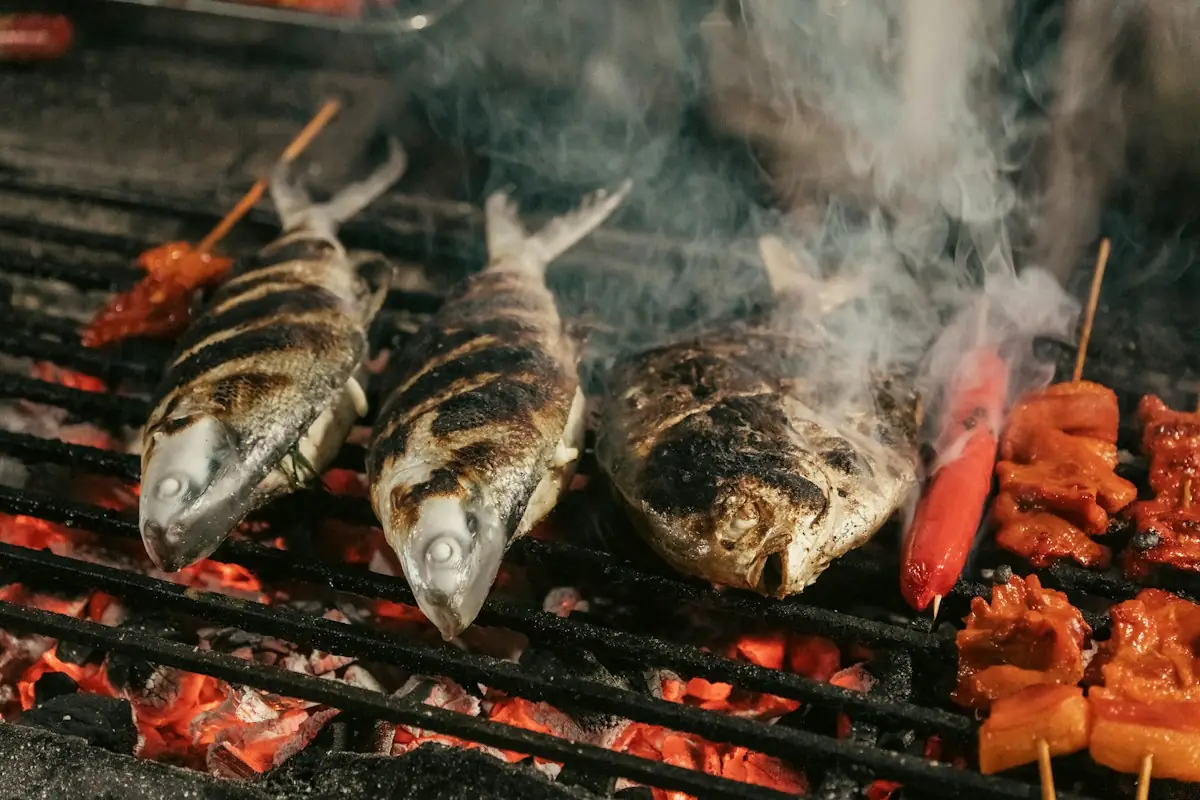
The best-value way to eat seafood in Phuket is “buy at the market, have it cooked next door”: at the Rawai seafood market or Banzaan in Patong you choose the catch by weight, and a neighbouring café cooks it for roughly 50–150 ฿ a dish. Dinner for two without lobster usually comes to about 800–1,500 ฿; for a view and full service, head to a seafront restaurant.
Key facts
- The Rawai market sits on the Rawai seafront by the sea gypsy village; stalls run from morning until about 9–10pm, with the freshest catch before lunch.
- Banzaan is a covered market behind Jungceylon mall in Patong: raw seafood downstairs, a food court upstairs that cooks it.
- Cooking costs roughly 50–150 ฿ a dish; some places charge about 100 ฿ per kilo instead.
- Rough 2026 prices: tiger prawns 350–600 ฿/kg, squid 200–350 ฿/kg, mud crab 500–900 ฿/kg.
- Restaurants often price seafood per 100 g rather than per kilo: check the unit before you order.
- In the rainy season (May to October) some boats stay in during storms, and the market choice is thinner.
How “buy at the market, cook next door” works
- Walk the stalls and compare a couple of them: prices for the same thing differ.
- Point to what you want and ask them to weigh it in front of you. Confirm the total before it is cleaned and bagged.
- Hard bargaining is not the custom, but a polite counter-offer is fine, especially when you buy several items.
- Pay the vendor in cash and keep the receipt, or note the weight and price.
- Take the bag to a café across the road or next door and choose the cooking style: grilled, steamed with lime, with garlic, in curry, or fried in batter.
- The café charges for cooking, and you order rice, vegetables and drinks from its menu.
The Rawai seafood market: what to know
The market runs along the seafront in southern Rawai, with longtail boats moored in front and the Chao Lay (sea gypsy) village next door. Come before lunch for the freshest fish; in the evening, roughly 5 to 8pm, there is more atmosphere and every café across the road is open. The sea gypsy village is a residential area, so do not photograph people or homes without asking.
Rawai pier, where boats leave for Racha and Coral islands, is close by, so the market pairs well with a boat trip or sunset at Promthep Cape. More on the area is in a separate guide.
Banzaan in Patong: seafood in the middle of the resort
Banzaan is a covered fresh market right behind Jungceylon shopping centre. The ground floor sells fish, prawns, squid and lobster, and the upper floor has a food court that cooks what you choose for a small fee or serves ordinary Thai dishes. The day market opens early in the morning, and in the evening street food stalls appear around the building. Sources disagree on opening hours, so check a map app before you go. The upside of Banzaan is that it is walkable from most Patong hotels; the downside is that prices are usually a little higher than in Rawai.
Seafood prices in Phuket: a rough guide per kilo
| Item | Rough price, ฿ per kg | Best cooked |
|---|---|---|
| Tiger prawns | 350–600 | Grilled, with garlic |
| River prawns | 250–400 (large ones more) | Grilled |
| Squid | 200–350 | Grilled, stir-fried with lime |
| Mud crab | 500–900 | In curry, with pepper |
| Snapper, sea bass | 250–450 | Steamed with lime, deep-fried |
| Mussels, clams | 100–180 | With basil, steamed |
| Scallops | 300–500 | Grilled with butter |
| Spiny lobster | from 1,500, size-dependent | Grilled, split |
These are rough figures as of October 2026: they change daily and depend on size and on whether the item is live. In restaurants with an ice display, the price is often per 100 g, and a bill for a “cheap” lobster can easily reach several thousand baht. Confirm the unit, the weight and the total before the item goes to the kitchen.
How to pick fresh seafood and avoid overpaying at the scales
- Fish: clear, bulging eyes, bright red gills, firm flesh and a clean sea smell with no hint of ammonia.
- Prawns: the head is firmly attached, the shell is glossy, with no black spots near the head.
- Crabs and lobsters: buy only live, lively ones; a sluggish lobster is a poor buy for serious money.
- Mussels and clams: shells closed, or closing when tapped.
- Make sure there is no extra water or ice in the bag when it is weighed, and watch the scale display.
- Do not leave your purchase unattended before cooking: keep the bag with you or keep an eye on it in the kitchen.
Seasons: when the choice is best
From November to April the Andaman Sea is calm, boats go out almost every day and the markets have the widest choice. From May to October, the south-west monsoon season, small fishing boats stay ashore on stormy days, and farmed prawns, farmed fish and supplies from the mainland fill part of the counters. Eating seafood in the low season is perfectly fine; the choice and prices simply depend more on that week’s weather.
Seafront restaurants: when you want service, not a market
If you would rather sit by the water without bags and scales, pick a seafood restaurant. The AURA catalogue includes Kan Eang@Pier by Chalong pier, cooking seafood since 1973 with tables in the shade of trees by the water; Mor Mu Dong in the Chalong mangroves, with pavilions over the water and a Michelin Bib Gourmand; and Nikita’s at the far end of Rawai Beach, with a veranda under big trees. For crab curry, people head to Raya in Phuket Town.
Seafood restaurants in Phuket — catalogue
Allergies and food safety
Fish sauce and shrimp paste are in almost every Thai dish, so with a seafood allergy tell the waiter specifically, or better, show a card written in Thai. Order clams and mussels only well cooked, and have raw oysters only at restaurants you trust. Swelling, a rash or difficulty breathing after a meal is a reason to go straight to hospital. This is general information, not medical advice.
Frequently asked questions
Where can I eat cheap seafood in Phuket?
At the Rawai seafood market or Banzaan in Patong: you buy the catch by weight and a café next door cooks it for roughly 50–150 ฿ a dish. It works out much cheaper than ordering the same at a beach restaurant.
How much is seafood at the Rawai market?
Roughly, for 2026: tiger prawns 350–600 ฿ per kg, squid 200–350 ฿, mud crab 500–900 ฿, spiny lobster from 1,500 ฿ per kg. Prices change daily and depend on size.
How does Banzaan market in Patong work?
It is a covered market behind Jungceylon: you buy raw seafood on the ground floor, and the food court upstairs cooks it for a fee. Check current opening hours in a map app.
How do I avoid overpaying for seafood at a restaurant?
Check the unit the price refers to (often 100 g), ask for it to be weighed in front of you and for the total before cooking. Choose a live lobster or crab yourself.
Is it fine to eat seafood in Phuket in the rainy season?
Yes. From May to October some boats stay in on stormy days, so the choice is thinner and more of it is farmed, but the markets and restaurants stay open.
Want a seafood dinner by the water without the market bustle? The AURA AI concierge will match a restaurant from the catalogue to your area and budget, and a manager at the venue confirms the table.