Rawai, Phuket: beach, seafood market, pier and living
Rawai honestly: why nobody swims here, how the seafood market works, boats to Racha and Coral, the sea gypsy village, expat life and getting there.
Updated: 2026-10-10 · 6 min read · AURA Phuket
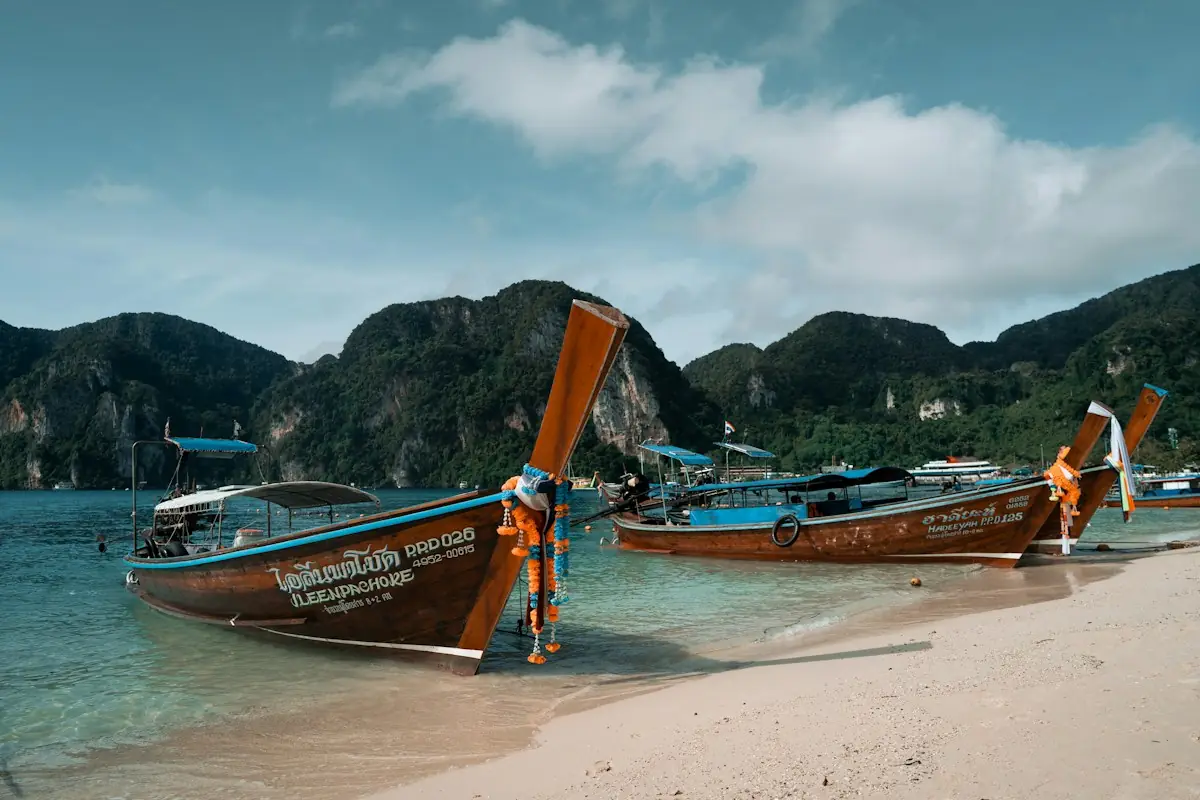
Rawai in Phuket is not a swimming beach but a village at the island’s southern tip: shallow water with boats moored offshore, a pier where speedboats leave for Racha and Coral islands, a buy-and-cook seafood market and a sea gypsy village. Many expats live here, Russian speakers among them, and people go to swim at neighbouring Nai Harn, five to ten minutes away.
Key facts
- Rawai is in the south of the island, Mueang Phuket district; the airport is 60–80 minutes by car, Phuket Town about half an hour.
- The beach is shallow, the sea retreats far at low tide and longtails moor offshore: people swim at Nai Harn or Yanui.
- From Rawai pier, Coral Island is about 20 minutes by speedboat; Racha is further away, with clearer water.
- The seafood market runs roughly from morning to 9–10pm; cafés across the road cook your catch for about 50–150 ฿ a dish.
- The Urak Lawoi community (Chao Lay, the sea gypsies) lives next door: it is a residential village, not an attraction.
- From November to April the north-east monsoon blows on the south-east coast: kite season around Rawai and Chalong.
Rawai Beach: why people do not swim here
Rawai’s shore faces south-east towards the islands and is sheltered from big waves, but it is awkward for swimming. The bottom is shallow, at low tide the sea pulls back tens of metres to reveal rocks and mud, and dozens of boats ride at anchor along the shore. Reviews of Rawai Beach are therefore often disappointed from people who came for a swim and warm from those who came for the market, the boats and the sunsets on the nearby headland.
The seafront itself is pleasant for a walk: seafood cafés, small shops, views of the islands and the longtails. At the far end of the beach, under big trees, is Nikita’s, a restaurant with a veranda from the AURA catalogue. For swimming, Nai Harn bay, little Yanui beach and Ao Sane are five to ten minutes away.
Rawai pier: boats to Racha and Coral islands
Rawai is the point on Phuket closest to the southern islands, so a sea day from here means minimal time on the boat. Coral Island (Koh Hey) is twenty minutes away: calm beaches, snorkelling from the shore, easy with children. Racha Yai is further, but the water is clearer and the bays prettier. Many trips combine both islands in one day.
- An organised trip includes the boat, gear and usually a hotel transfer; you can also hire a longtail on the beach, but agree the price and route first.
- Underwater visibility is best from November to April; from May to October trips can be cancelled because of waves.
- Bring reef-safe sunscreen and water shoes: coral cuts are easy to get.
- Bring cash: beach cafés on the islands do not all take cards.
Racha and Coral islands from Rawai pier — itinerary and booking — from 1,600 ฿
Rawai seafood market: buy it, have it cooked
The market runs along the seafront by the sea gypsy village. The routine is simple: choose fish, prawns or shellfish by weight, pay the vendor, carry the bag to a café across the road and pay separately for cooking, roughly 50–150 ฿ a dish. Ask the price per kilo before weighing, and at the café check whether they charge per dish or by weight. The freshest catch is before lunch, and the best atmosphere is from 5 to 8pm. Prices and choosing the catch are covered in detail in our seafood guide.
Seafood in Phuket — prices and markets
The sea gypsies: how to behave in the village
The Urak Lawoi are one of the indigenous sea peoples of the Andaman coast, known in Thailand as Chao Lay. Their ancestors lived on boats, and in Rawai the community has been settled for more than a century: homes, boats and shrines are here, and many still fish for a living. The village has spent years defending its right to the land by the shore, so for residents it is home, not a tourist set. Twice a year the community holds a ceremony of launching a ritual boat, with dates set by the lunar calendar.
- Ask before photographing people, homes and shrines.
- Do not walk into yards or onto boats; keep to shared paths.
- Buy from local vendors at the market, but not coral: taking it out of Thailand is prohibited.
- Do not hand out sweets or money to children; buy something from a family at the market instead.
Living in Rawai: expats, housing and daily life
Rawai and neighbouring Nai Harn have long been chosen for winter stays and living: they are quieter than the west-coast beaches, with plenty of houses with gardens for long-term rent, cafés with familiar food, gyms and Muay Thai camps. Big supermarkets on the road to Chalong circle make daily life easy. There is one serious drawback: without a scooter or car it is inconvenient, everything is spread out, and at rush hour the Chalong circle jams.
| Area | Pros | Cons |
|---|---|---|
| Rawai | Market, pier, cafés, cheaper than resort areas | Not a swimming beach, transport needed |
| Nai Harn | Beautiful bay and a lake with a path | Pricier housing, summer waves on the beach |
| Chalong | Shops, clinics, pier for sea tours | Traffic, a drive to a good beach |
What to see and do nearby
- Promthep Cape, Phuket’s best-known sunset spot, is 10 minutes from Rawai; arrive 40 minutes before sunset, as parking fills up.
- Nai Harn is the swimming beach in the dry season, with a lake and a walking path around it.
- Yanui and Ao Sane are small coves by the cape, good for snorkelling on calm days.
- Kitesurfing: from November to April schools work around Rawai and Chalong Bay, where the north-east wind blows.
- An early boat at sunrise is a way to see the islands before the day boats arrive.
How to get to Rawai
From the airport a taxi or transfer takes 60–80 minutes. The Smart Bus runs from the airport to Rawai along the whole west coast, with a flat 100 ฿ fare as of October 2026, but the trip takes around two hours or more. From Phuket Town, blue songthaews leave the Ranong Road market during the day. Locally, renting a scooter or car is easiest; without riding experience, use Grab and Bolt.
Racha and Coral — a day trip from Chalong pier — from 1,600 ฿
Frequently asked questions
Can you swim at Rawai Beach?
Technically yes, but it is awkward: shallow, the sea retreats far at low tide, and there are rocks and boats by the shore. For swimming, people go to Nai Harn or Yanui, five to ten minutes away.
Rawai reviews: is it worth going?
Yes, if you are interested in the seafood market, boat trips from the nearest pier and sunset at Promthep. If you want a beach by your hotel, stay at Nai Harn or Kata instead.
How does the Rawai seafood market work?
You buy the catch by weight from a vendor, and a café across the road cooks it for a separate fee, roughly 50–150 ฿ a dish. Ask the price per kilo before it is weighed.
How long is the boat to Coral Island from Rawai?
About 20 minutes by speedboat. Racha takes longer, so trips covering both islands last a full day.
Rawai or Nai Harn: which is better to live in?
Nai Harn is prettier and closer to a swimming beach, but pricier. Rawai is cheaper and easier for daily life, and Nai Harn beach is still five to ten minutes away by scooter.
Planning a day in the south of the island? The AURA concierge will put together an island trip from Rawai pier, a transfer and a seaside dinner with verified partners: the request takes about a minute, and you pay the partner after confirmation.