Phuket visa run 2026: border run to Satun, Ranong, flights
What a border run is, whether it is legal, the two land entries cap since 15.09.2026, the Satun trip, Ranong’s status, flying out and what to bring.
Updated: 2026-10-10 · 6 min read · AURA Phuket
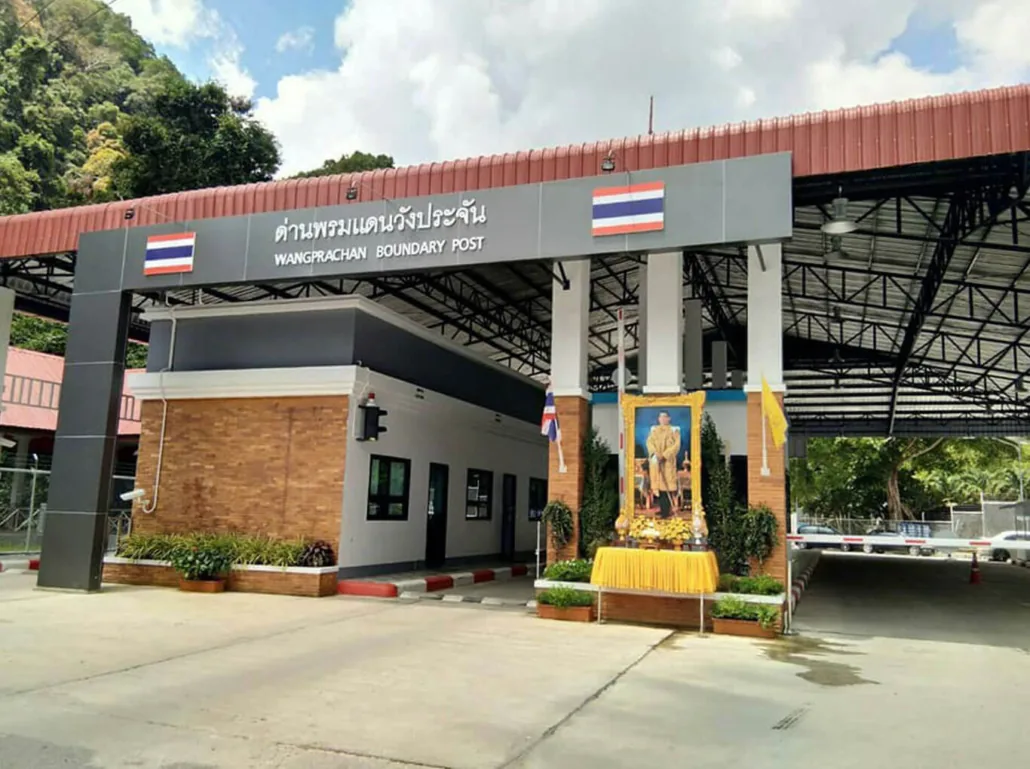
A border run is a trip out of Thailand into a neighbouring country and back on the same day to get a fresh entry stamp. From Phuket, most people go to Satun on the Malaysian border (the Wang Prachan checkpoint): one day by minivan with no boats. The alternatives are Ranong on the Myanmar border and a flying visa run to Kuala Lumpur. Since 15 September 2026, visa-exempt entries over land are limited to two per calendar year.
Key facts
- A border run is legal, but the officer always decides on entry: frequent back-to-back entries raise questions.
- Since 15.09.2026 visa-exempt entries through land checkpoints are capped at two per calendar year; entries by air are not covered by the cap.
- Satun (Wang Prachan): leave Phuket around 4am, back around 8pm; the stamp itself takes 5 to 15 minutes.
- Russians need no visa for Malaysia (up to 30 days), but the free MDAC digital arrival card is mandatory and is filed within 3 days before entry.
- Re-entering Thailand requires the TDAC arrival card, including at land checkpoints.
Border run and visa run: what they are and how they differ
The two terms are often used interchangeably, but the meaning differs slightly. A border run means crossing a land border and coming straight back to get a new visa-exempt period on entry. A visa run, strictly speaking, is a trip to a neighbouring country to obtain a visa at a Thai consulate. Today most visas are applied for online via thaievisa.go.th, so visa run now usually means any trip out for a new stamp, including a short flight.
Is a border run legal, and what are the risks
Leaving and re-entering is not against the law in itself. But visa exemption is meant for tourism, and the border officer may refuse entry if the stamps show that a person effectively lives in Thailand, leaving for a day at a time. As of October 2026, several rules matter:
- The land entry cap: under Thai Interior Ministry rules in force since 15 September 2026, visa-exempt entry through land checkpoints is allowed no more than twice per calendar year. Russians enter under a bilateral agreement and there is no separate clarification for them, so it is sensible to assume the same cap.
- Funds and ticket: under the visa-exemption rules you may be asked to show an onward ticket and money (a guide figure of 20,000 baht per person or 40,000 baht per family, in cash or equivalent).
- Back-to-back border runs: a third or fourth entry in a short period is very likely to draw attention, up to refusal and being turned back at the border.
- Overstay: if the run falls through and your stamp has expired, a fine accrues for every day, and long overstays lead to an entry ban.
How many days visa-free entry gives Russians, and whether it can be extended at immigration without leaving, is covered in a separate article: sometimes an extension on the spot is simpler and cheaper than a trip to the border.
Visa-free Thailand for Russians: stay and extensions
Border run from Phuket: where to go
| Route | How you get there | Time | Things to know |
|---|---|---|---|
| Satun → Malaysia (Wang Prachan) | Minivan from your hotel | All day, about 16 hours | No boat, MDAC needed, land cap applies |
| Ranong → Myanmar (Kawthaung) | Minivan and boat | All day | Check 2026 status for foreigners |
| By air: Kuala Lumpur | Direct flight from HKT | 1 day or overnight | No land cap, costs more |
| By air: Singapore | Direct flight from HKT | 1 to 2 days | No land cap, expensive city |
Satun: how the trip works
The Wang Prachan checkpoint is in Satun province; opposite it on the Malaysian side is the Wang Kelian post in Perlis state. Organised minivans collect passengers from hotels around the island while it is still dark, the drive takes more than half a day each way, and at the border you exit Thailand, pass Malaysian control, turn around and re-enter. According to the published schedule of the operator KBV Phuket Visa Run (September 2026), trips run on Wednesdays and Sundays with pick-ups from 4am and return around 8pm; the price covers the transfer, insurance and lunch, while visa fees are not included.
- Fill in the MDAC on the official Malaysian immigration portal imigresen-online.imi.gov.my no earlier than 3 days before the trip. It is free; sites that charge for it are middlemen.
- Fill in the TDAC for re-entering Thailand, selecting land as the mode of arrival.
- Make sure your passport has at least two blank pages and at least 6 months of validity.
- Carry cash in baht in case your funds are checked and for small expenses, plus a printout or screenshot of your onward ticket out of Thailand.
Same-day visa run to Satun — book through AURA — from 3,500 ฿ /trip · KBV Phuket Visa Run · Phuket → Satun
Ranong and Myanmar: is the route open
Ranong used to be the classic route: a minivan to the pier, a boat to Kawthaung in Myanmar, a stamp and back. Since 2021 the crossing has closed and reopened several times, and as of October 2026 there is no reliable official confirmation that foreign tourists can freely use it for a border run. If you want to go via Ranong, first call Ranong immigration or ask an operator who is running groups there right now, rather than relying on last year’s reviews.
Flying out: when it makes more sense
Phuket airport has direct flights to Kuala Lumpur and Singapore, and the land entry cap does not apply to arrivals by air. A flight costs more than a minivan, but you skip 16 hours on southern roads, and the trip easily becomes a short break with a night away. It is a sensible choice if both land entries for the year are used, if you travel with children, or if a new visa starts right after you leave. Plan at least one night away: flying out and back within the same hour looks the same as a border run at passport control.
When a border run is not the answer
If you spend more than two or three months a year on Phuket, a chain of border runs becomes both inconvenient and risky. For a winter stay the TR tourist visa works better (60 days, extendable by another 30 at immigration); for living here there is the five-year DTV, the retirement visa for those 50 and over, or a Thailand Privilege membership. All of them give a legal long stay without a trip to the border every few weeks. This article is for information only and is not legal advice: entry rules change, so check official sources before you travel.
The five-year DTV visa: requirements and applying
Frequently asked questions
What is a border run in simple terms?
It is a trip out of Thailand into a neighbouring country and straight back, to get a new period of stay on entry. From Phuket, people usually go to Satun on the Malaysian border.
How many border runs can you do in 2026?
Since 15 September 2026, visa-exempt entry through land checkpoints is limited to twice per calendar year. Air entries do not count towards that cap, but frequent back-to-back entries can lead to refusal there too.
How long does a border run from Phuket to Satun take?
A full day: hotel pick-ups start around 4am and you are back on Phuket around 8pm. The border formalities take 5 to 15 minutes; the rest is driving.
Do I need a Malaysian visa for a border run?
Russians do not need a visa for Malaysia for stays of up to 30 days. Before entry, however, you must fill in the free MDAC digital arrival card on the Malaysian immigration website.
Does the Ranong border run still work?
As of October 2026 there is no official confirmation that the Ranong to Kawthaung crossing is open to tourists for border runs. Check with Ranong immigration before you go, or choose Satun instead.
A seat on the Satun minivan can be booked through the AURA catalogue: a request takes about a minute, the operator confirms the date, and you pay only after confirmation, directly to the partner.