Glowing Plankton in Phuket: Where and When to See It
Where the plankton glows near Phuket, why the new moon and a dark bay matter, new-moon dates for 2026, how the evening tours work and what to really expect.
Updated: 2026-10-10 · 6 min read · AURA Phuket
Glowing plankton near Phuket is best seen in the dark bays of Phang Nga Bay, far from hotel lights, on a moonless night with calm water. The glow only flashes when the water moves: around a hand, a paddle or a wave. The most reliable dates are a few days either side of the new moon, in the first hours after sunset.
Key facts
- The light comes from single-celled algae called dinoflagellates: each flash lasts a fraction of a second and happens when the water is disturbed.
- The best window runs from the waning crescent to 3–4 days after the new moon; the next new moons in Thai time are 10 October, 9 November and 9 December 2026.
- Around the full moon the glow is barely visible because moonlight drowns it out.
- Plankton tours come back late: the full programme from Phuket takes about 14 hours.
- Brightness changes from night to night, and nobody can guarantee it.
What it is and why the water glows
The warm water of the Andaman Sea is home to microscopic algae that can glow. A chemical reaction runs inside each cell: when the water around it is jolted, the cell answers with a short blue-green flash. Scientists think it helps the algae scare off whatever wants to eat them. To a person it looks like sparks around your palms, a glowing trail behind a paddle or shimmering drops running off your arms.
The key thing to understand in advance: the plankton does not give off a steady glow on its own. If you stand on the shore and look at still water, you may see nothing at all. The light appears when you move in the water, paddle, or when a wave breaks against the boat.
Where to see glowing plankton near Phuket
On the main west-coast beaches (Patong, Karon, Kata) the chances are slim: there is too much light from hotels, bars and streets, and in the rainy season the sea is rough at night too. Phang Nga Bay to the north-east of the island is more reliable. Its bays are sheltered from the swell by limestone islands, the shores are lined with mangroves, and there are few villages or lights. Tours usually head to one of these dark, quiet bays.
Sometimes the glow is spotted along dark, undeveloped stretches of Phuket’s own coast too, but that is luck rather than a plan for the evening. If you want to see the plankton with confidence, choose an organised trip on the right dates.
When to go: the moon, the weather and the season
The moon matters more than the month. After the full moon it rises about 50 minutes later each evening, so in the last week before the new moon the first hours of darkness stay moonless. Right after the new moon the young crescent sets soon after sunset. That gives a window of about 10 days when the sky is dark from 7pm to 9pm. At the full moon and a couple of days before it, there is no point going plankton hunting.
| Condition | What happens to the glow |
|---|---|
| New moon ±3–4 days | The best chance, the glow shows clearly |
| Full moon | Barely visible, even with plenty of plankton |
| Cloudy but dry | Darker, so you see more |
| Heavy rain, wind | Flashes get lost in the chop, tours may be cancelled |
| Shore lights nearby | Your eyes never adjust to the dark, the glow looks faint |
| Murky water after downpours | The glow is there, but noticeably weaker |
Opinions on the season differ. From November to April the weather is steadier, the water is clearer and tours are cancelled less often. In the rainy season, May to October, there are some very bright nights, but also cancellations for storms. If you are in Phuket for a week that includes the new moon, book the trip for the start of the window so you have a spare evening if it is called off.
How the evening plankton tours work
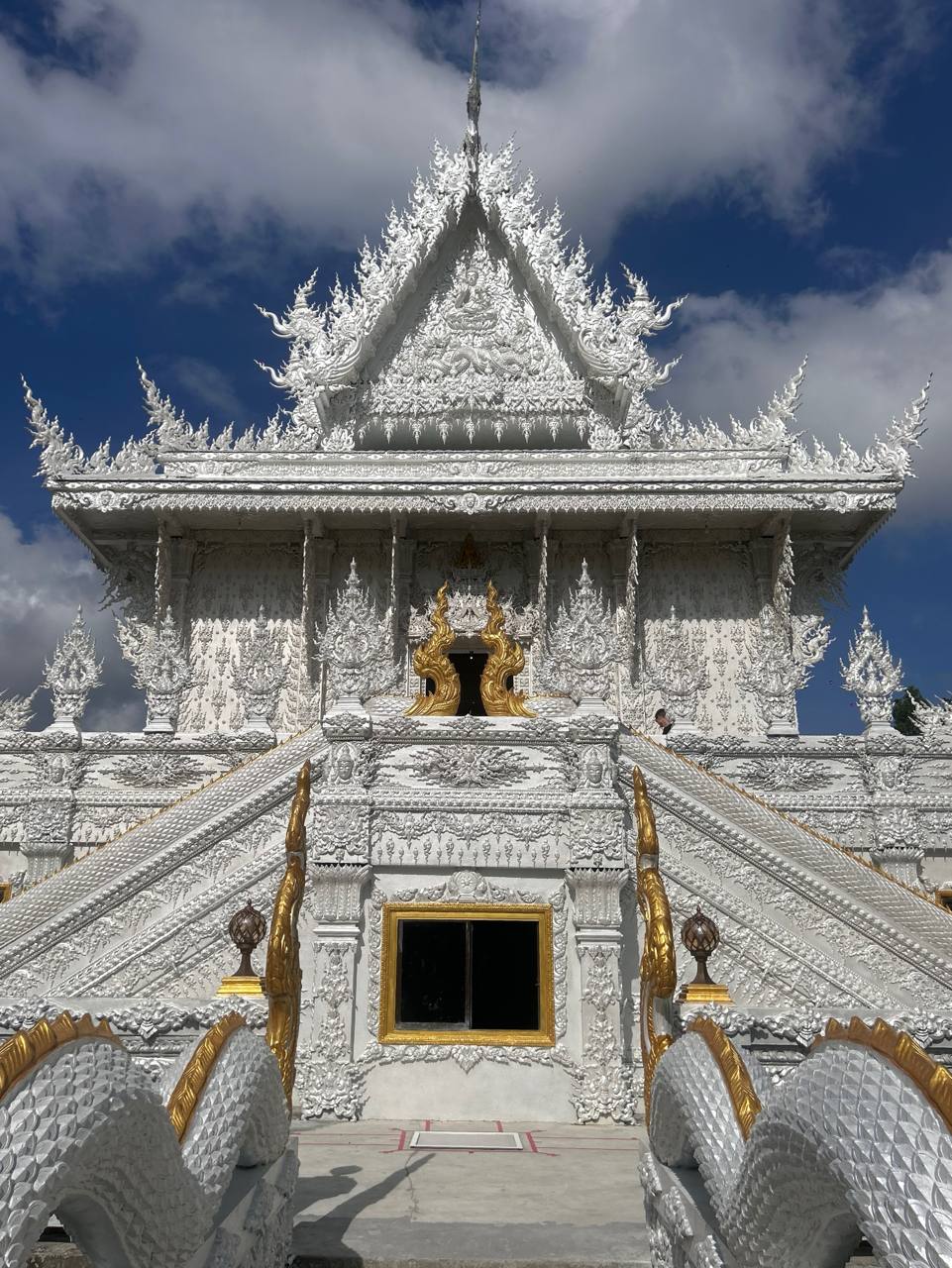
Plankton has to be seen in the dark, so tours are built as a long day with the finale after sunset. You are picked up from your hotel in the morning or early afternoon, followed by a mainland programme: the Samet Nangshe viewpoint or the glass skywalk over the bay, the White Temple, a spa. After sunset the group moves to a dark bay and swims or paddles kayaks while their eyes adjust to the dark. You are back at the hotel late in the evening, and the whole trip takes about 14 hours.
- A kayak gives the prettiest effect: every stroke leaves a glowing trail and sparks drip from the paddle.
- Swimming from the boat or the shore puts the glow all around your body; guides hand out life jackets and keep an eye on the group.
- Give your eyes 10–15 minutes without a phone or torch: the less light, the more you see.
- Wear swimwear under your clothes and bring a towel, a dry change of clothes, mosquito repellent and a waterproof phone pouch.
Plankton, Samet Nangshe and spa: the tour — from 3,500 ฿
Realistic expectations and photos
The bright social media shots of glowing turquoise water are almost always long exposures with editing. With your own eyes you will see a scatter of small blue sparks that flash and fade as you move. On a good night there are a great many of them and it is genuinely mesmerising; on a weak night, just a few pinpricks. A promise of a «guaranteed glow» is a reason to be wary.
A phone barely captures plankton, even in night mode. If you want to try, you need a camera on a steady support, a 10–30 second exposure and a high ISO, with someone in the frame moving the water. Do not use the flash: it blinds you and the rest of the group.
Safety on the water at night
- Never swim in the sea at night alone or without a life jacket: in the dark you can see neither currents nor boats.
- For children, the kayak format or a swim near the shore in a life jacket works; keep them close.
- In the rainy season jellyfish turn up along the Andaman coast: if you are stung, tell the guide at once, do not rub the skin and do not rinse it with fresh water (vinegar is the usual first aid for jellyfish stings).
- You need no sunscreen in the evening; since 2021 Thailand’s marine national parks have banned sunscreens containing oxybenzone, octinoxate, 4-MBC and butylparaben.
- Mangroves mean mosquitoes: put on repellent before sunset.
If you would rather combine the plankton with the glass skywalk and the White Temple, there is a version with a different daytime programme; the Samet Nangshe viewpoint itself has its own detailed article.
Plankton, glass skywalk and White Temple: the tour — from 3,500 ฿
Frequently asked questions
Where can I see glowing plankton in Phuket?
Most reliably in the dark, sheltered bays of Phang Nga Bay, where the evening tours go. On the lit-up beaches of Patong, Kata and Karon the chances are slim.
When is the best time to see the glowing plankton?
On moonless evenings: from the last week before the new moon to 3–4 days after it, between 7pm and 9pm. The next new moons are 10 October, 9 November and 9 December 2026.
Can you swim with the glowing plankton?
Yes, the algae themselves are harmless to people, and the glow around your body is the whole point. Swim only with a guide and in a life jacket.
Will the plankton show up in photos?
Hardly at all on a phone. You need a camera on a support and a 10–30 second exposure; social media shots are usually edited.
Can I take children to see the plankton?
Yes, if the child can manage a day of about 14 hours. Choose the kayak or a near-shore swim in a life jacket and keep the child close.
To land on the right dates, check the moon calendar and send a tour request through the AURA catalogue: the partner’s manager confirms the departure, and you pay only after confirmation.