Currency exchange scams in Thailand: schemes and protection
Telegram clones, P2P with someone else’s roubles, short counts: how to check a Bank of Thailand licence and what to do if an exchange went wrong.
Updated: 2026-10-10 · 7 min read · AURA Phuket
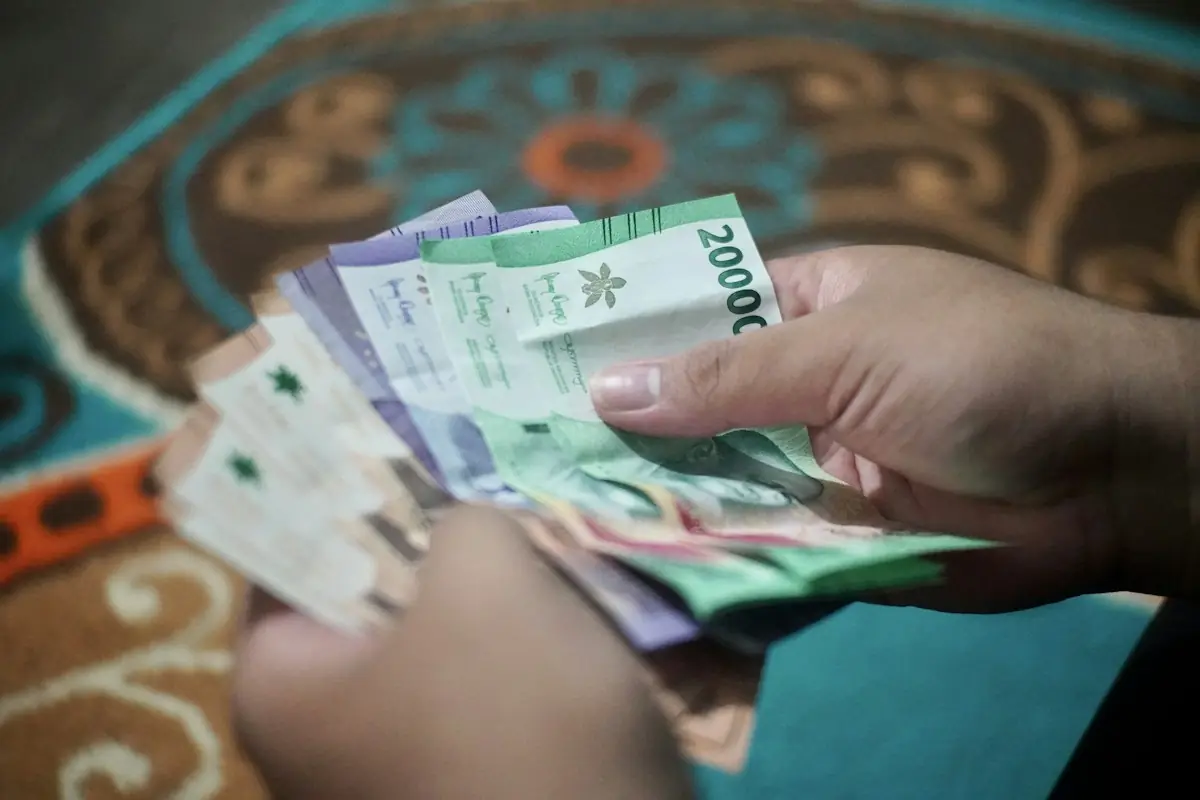
As of October 2026, currency exchange scams in Thailand mostly happen on Telegram rather than at street kiosks: clones of well-known exchangers, a «best rate» that demands prepayment, and P2P deals with someone else’s roubles. Protection comes down to three rules: use only companies licensed under Bank of Thailand supervision, open the bot from a link on the official website, and start with a small amount.
Key facts
- Outside banks, only companies licensed by Thailand’s Ministry of Finance may buy and sell foreign currency; the Bank of Thailand supervises them (bot.or.th).
- The Bank of Thailand publishes a list of licensed money changers, and a company can also be looked up via its BOT License Check service.
- The most common scheme in 2026: a fake Telegram account using a real exchanger’s name and avatar that messages you first.
- Since 5 July 2025, handing over your card or access to it for a reward can lead to criminal liability in Russia under Article 187 of the Criminal Code.
- Thailand’s Tourist Police: 1155 (English spoken); online scam hotline: 1441.
How people get cheated when exchanging money in Thailand: the main schemes
Almost every case fits one of six scenarios. Online schemes are more dangerous than street ones: at a counter you might lose a few hundred baht, while on Telegram you can transfer your whole holiday budget and never hear from the «operator» again.
| Scheme | What it looks like | Red flag | Protection |
|---|---|---|---|
| Telegram clone | Same name and avatar as a real exchanger | Messages first, username differs by a character | Open the bot only from the website |
| «Best rate» with prepayment | Rate clearly better than everyone else’s | Rushes you, wants the full amount | Compare rates, start small |
| P2P with someone else’s roubles | Roubles come from a third party | Sender is not the person you agreed with | Avoid private individuals |
| Short count | The cashier counts the stack for you | Distracting small talk | Count it yourself at the window |
| Counterfeit notes | Hand-to-hand swap on the street or via chat | No counter, receipt or licence | Licensed counters only |
| Unlicensed courier | Brings cash, wants money upfront | No company or licence number | A licensed exchanger’s courier |
Cheated by a Telegram exchanger: how clones work
This scheme targets people looking for an exchange in Phuket chat groups. You post «need to change roubles» in a public chat, and within a minute a «manager» messages you privately, using a known exchanger’s logo, the same description and even pinned «reviews». The rate is slightly better than on the website, and the payment details are, for some reason, a private person’s card: «the main card has hit its limit». After you pay, the account is deleted or blocks you.
- Real exchangers almost never message you first: you normally open their bot or channel yourself.
- Check the username character by character: clones swap a letter or add an underscore or a digit.
- Open a bot only from a link on the company’s official website, never from a forwarded message.
- Payment details changed «for just this one deal», a private person’s card instead of the usual process, and pressure to hurry: end the conversation at once.
- Reviews in a channel prove nothing: they are easy to fake or copy.
P2P rouble-to-baht exchange: risks for your card and the law
A P2P swap with a private individual looks profitable, but the risk is twofold. First, you do not know whose card is on the other side: if it is already in the Bank of Russia’s database of fraudulent transactions, your bank may suspend the transfer under Federal Law 161-FZ, and the money gets stuck. Second, when you exchange in the other direction, roubles may reach you from a stranger, for example a victim of someone else’s fraud. Then restrictions may hit your own account, and they are harder to lift than to get: since 1 September 2025 Russian banks must refuse to issue cards or connect online banking to anyone listed in that database.
A separate case is a request to «receive a transfer to your card and hand over cash» or to «lend your card for a couple of days». Since 5 July 2025, doing this for a reward falls under parts 3 to 6 of Article 187 of the Russian Criminal Code (so-called money muling). In Thailand itself, running a currency exchange business without a licence is also illegal, so a private dealer has neither a till nor any accountability to you. This section is for information only and is not legal advice.
Street exchange: short counts and fake notes
At a counter the tricks are small and rely on sleight of hand: the stack is counted in front of you, some notes slip under the counter, and the rate on the board turns out to be the rate «for large amounts». Count the money yourself without leaving the window and check the total against the receipt. Fake baht are rare at licensed exchangers; the risk appears when you swap hand to hand with private dealers on the street or through an ad. Typical island scams are covered in more detail in a separate safety guide.
Phuket safety and scams — guide
How to check an exchanger in Thailand: the Bank of Thailand licence
The licence to buy and sell foreign banknotes is issued by Thailand’s Ministry of Finance, while the Bank of Thailand sets the rules and supervises. In August and September 2026 the regulator consulted the market on a draft of stricter requirements for money changers, so the list of licensees may change. A check takes five minutes:
- Find out the exact company name and licence number: a counter usually displays an Authorized Money Changer sign with the number, and an online service lists it on its website.
- Check the name against the list on bot.or.th: the foreign exchange business section includes the companies allowed to buy and sell foreign banknotes; you can also use the BOT License Check search.
- Make sure there is a physical office with an address you can find on a map and visit.
- The rate and the final amount must be known before you pay, not «after the money arrives».
- Do your first exchange with a small amount, even if the company checks out.
Here is what a transparent process looks like, using AURA’s exchange partner Bereza Exchange as an example: Bank of Thailand licence No. MC225680029, an office at 88/9-10 Kata Rd, Karon, roubles accepted via Russia’s SBP fast payment system, the rate shown in the Telegram bot before you confirm, and baht arriving 5–20 minutes after the payment is confirmed (cardless ATM withdrawal, transfer to a Thai bank account, or courier delivery in Phuket).
Currency exchange with a licensed partner — 1 option
What to do if you were cheated during an exchange
Act within the first hours: the sooner the bank knows about a disputed transfer, the better the chance of stopping it.
- Call your bank, report the fraudulent transfer and ask them to suspend or dispute it; keep the receipt and the case number.
- Take screenshots of the chat, profile, username, and the recipient’s card or phone number, then report the account using Telegram’s Report function.
- If the money went to a Thai bank account, call the 24-hour 1441 line (Anti Online Scam Operation Center): it can freeze the recipient’s account.
- To file a report in English, contact the Tourist Police on 1155; a call to 1441 still has to be followed by a formal police report.
- In Russia, file a police report, including via the Interior Ministry’s website, and attach your bank statement.
- Do not pay «money recovery lawyers» who find you on their own: they are the second wave of the same scheme.
A safe exchange routine in Phuket
The calmest option for a short holiday is cash dollars or euros that you exchange at licensed offices in town as you go. If you would rather not carry a large sum, pick a licensed service with an office on the island that accepts a rouble transfer and pays out baht at an ATM, to an account or by courier. Split the exchange into portions for 3–5 days rather than changing everything at once: the rate averages out, and any mistake costs less.
How to exchange roubles for baht in Phuket — guide
Frequently asked questions
How do I avoid currency exchange scammers in Thailand?
Exchange only with companies licensed by the Ministry of Finance under Bank of Thailand supervision, open the bot from a link on the official website and start with a small amount. The rate and final sum must be known before you pay.
A Telegram exchanger cheated me. What should I do?
Call your bank straight away and ask to dispute the transfer, and save screenshots of the chat and the recipient’s details. Then file a police report: in Thailand via the Tourist Police on 1155 or the 1441 line, in Russia via the police or the Interior Ministry website.
What are the risks of P2P rouble-to-baht exchange?
You may send money to a scammer or receive roubles from a stranger, after which your bank may restrict your account under Federal Law 161-FZ. A private dealer also has no licence, so getting money back after fraud is almost impossible.
How do I check a money changer’s licence in Thailand?
Get the company name and licence number, then find the company in the list of licensed money changers on bot.or.th or via BOT License Check. At counters the number is usually shown on an Authorized Money Changer sign.
Can I exchange money with private individuals in Phuket?
In Thailand, currency exchange as a business is allowed only for licensed companies. With a private dealer you risk counterfeit notes or losing a prepayment with no chance of recovery.
Need baht without carrying cash and without the risk of a clone? AURA’s currency exchange section lists a licensed partner: a request takes about a minute, and the platform charges the client no fee.